When I first started learning about the movie industry back in the mid-90’s as a teenager, cinema was dominated mostly by star vehicles. When studios were putting their projects together, […]
Rate this:
Quick! What’s this guy’s name?
When I first started learning about the movie industry back in the mid-90’s as a teenager, cinema was dominated mostly by star vehicles. When studios were putting their projects together, the story or concept of the movie mattered much less than answering the question who will star in it? Studios didn’t want to take a chance on a project if it didn’t feature one or more of a list of 10-15 people at any given time. The thought was that people wouldn’t show up to movies that didn’t have a big name on the poster. For years, I believed that was short-sighted. Why couldn’t you instead make a big ensemble movie with 5 or 6 lesser-known names where the story was the star? Well, that’s pretty much what we’ve been doing for the past two decades, with mixed results. The story or concept has been the star, but it rarely results in an above-average finished product. For years, in my non-public writings, I bemoaned the fact that big stars had more power than filmmakers in determining what movies got made. I’m sad to admit that in retrospect, those times more often resulted in great movies being made than how we’re doing things now.
Now, nobody shows up if all you have is a big name on the poster. And “big name” these days simply means being really famous, not the ability to draw money at the box office, as I’ll point out below. The formula has completely flipped. Could you make something like Cast Away now and have it gross $200 million domestic with one person carrying the entire movie? Not bloody likely.
Today, you can hardly get a movie made at the major studios if it isn’t some high-concept, big swinging dick of a movie based on previously existing IP. And boy, has the term “intellectual property” taken on a broad meaning. 30 years ago, most “based on” movies were adaptations of books, TV show adaptations or sequels to previous big screen hits. You might get a couple remakes in a year, or Hollywood would take yet another swing-and-miss at a video game adaptation (back when those movies sucked and failed 100% of the time). Now, there are movies based on magazine articles, movies based on toy lines, movies based on board games, spinoffs of prequels, movies based on Twitter threads (Zola, which was actually pretty good), movies based on games you play on your phone (Angry Birds), movies based on toys it hurts to step on (the Lego franchise) and even movies based on fucking emojis. Almost none of these require you to find a big movie star to get made, because the brand itself is the star. They expect you to say to yourself, “Hey, I recognize that! There’s a movie about it? I’m in!”
Since the turn of the century, after Blade in 1998 and the first X-Men movie in 2000, the biggest trend we’ve seen, obviously, are comic book movies. And that trend lasted 23 fucking years before finally hitting a wall with the infamous bombs of 2023 (Shazam! Fury of the Gods, Blue Beetle, Ant-Man and the Wasp: Quantumania, The Marvels, Aquaman and the Lost Kingdom). Of all the comic book movies released last year, only Guardians of the Galaxy: Vol. 3 made an impact at the box office, and even it didn’t cross $1 billion at the worldwide box office, the new standard for a true smash hit. It didn’t help that all of those movies were really bad, but in the past, a lack of quality wouldn’t necessarily prevent a superhero movie from being a hit.
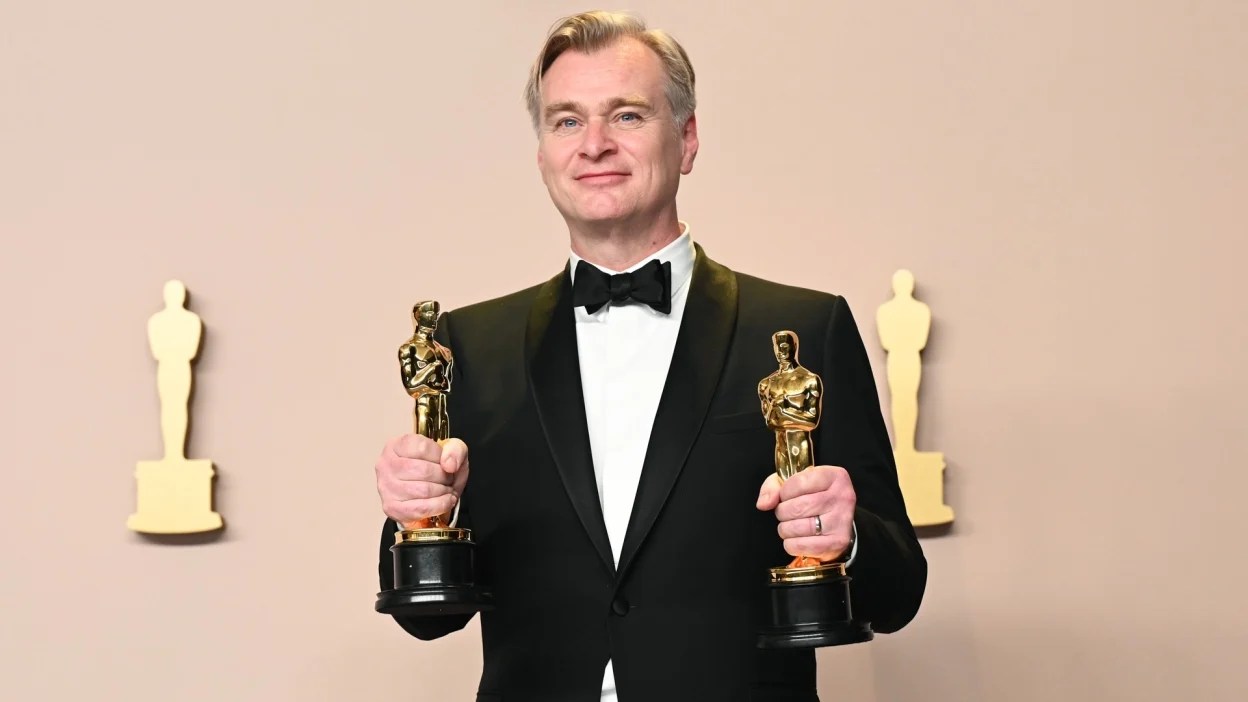
You could make a serious argument that the biggest movie star in the world right now is a director, Christopher Nolan. That’s really fuckin cool, but it’s not sustainable. There’s only one of him, and he makes movies at a typical pace of once every 3 years. But the success of Oppenheimer, an R-rated, 3-hour long drama with almost zero action or CG spectacle, can be almost entirely attributed to the faith audiences have in Nolan. A year later and I’m still astonished by that. Quentin Tarantino has been a hit-maker of late making original movies, but he’s not prolific either, and he’s about to make what he’s already declared will be his last movie. James Cameron makes one movie per decade at this point, and it’s just Avatar movies. Steven Spielberg‘s name means nothing to modern audiences because the people that made him famous, who are now 40 and older, don’t show up in large numbers anymore.
Not super relevant. I just like seeing Nolan with his 2 Oscars.
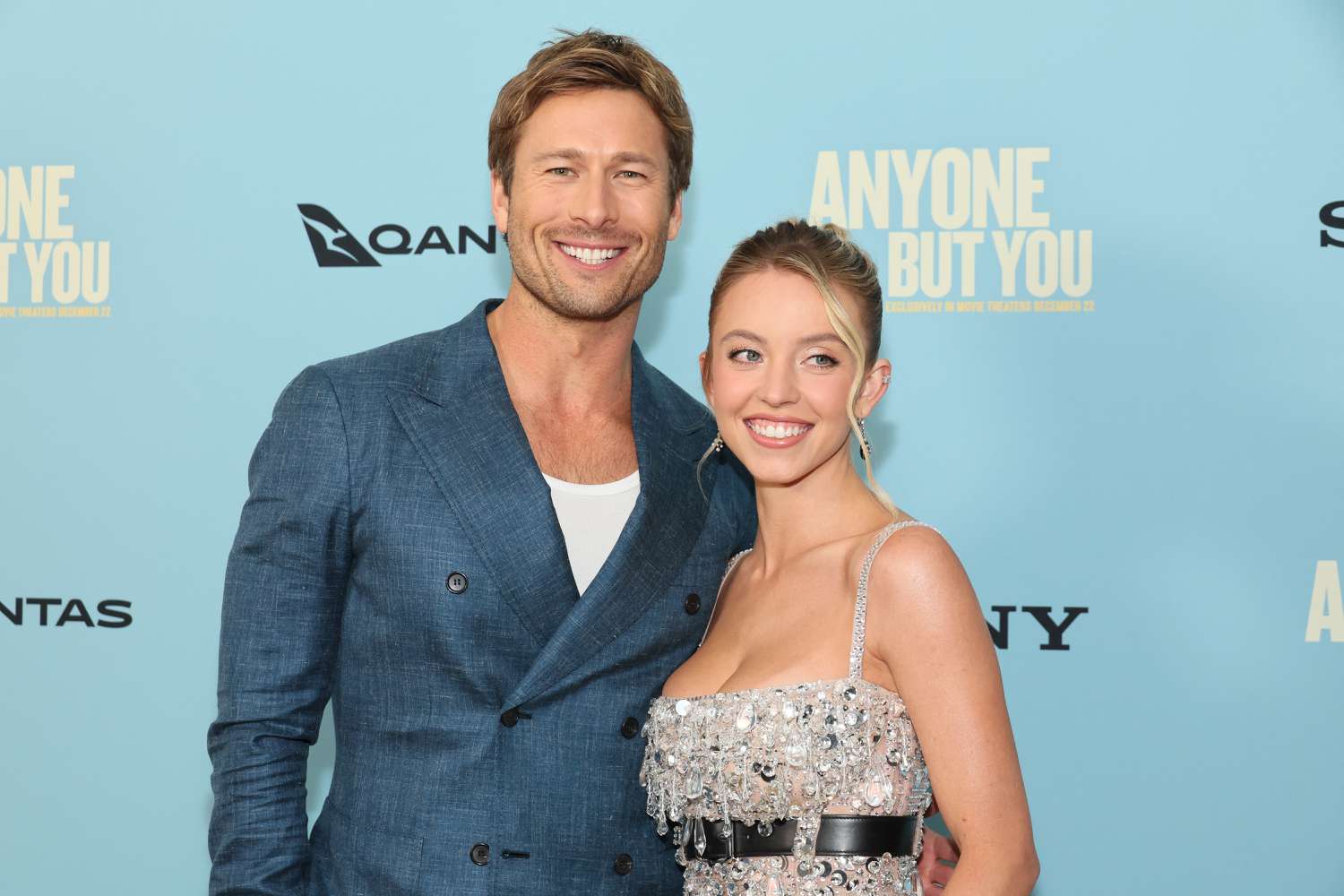
The Hollywood Reporter recently put out a list of the current, most sought-after “A-list” “stars” (check it out), the young actors who are getting most of the big roles and most of the parts in what few star vehicles there are these days. I think the list is accurate, if not troubling. First, almost everyone on it is white, despite the internet outrage and forced diversity initiatives of the past 5-6 years (hooray progress!). So we’re casting minorities a lot more now, just not putting them in the movies and shows people want to watch. Great work, everybody. More importantly, nobody on that list can open an original movie on their own like the movie stars of the 90s could. Nobody. Zero. Glen Powell, the biggest It Boy in Hollywood right now, is 35, and the reason most people know who he is is because of Top Gun: Maverick, the success of which had nothing to do with him despite the fact he was quite good in it. He’s the perfect age to become a true movie star. But wait.
Try and find a lot of studio movies without at least one of these people in them for the next 5 years.
Let’s compare Powell to what a leading man could accomplish 30 years ago. Let’s compare him to his Top Gun co-star, Tom Cruise. By the time Cruise was 35 (in 1997), here are just some of the movies he’d already made: Risky Business, The Color of Money, Top Gun, Rain Man, Days of Thunder, Born on the Fourth of July, A Few Good Men, The Firm, Mission: Impossible, Jerry Maguire. The first Mission movie and Jerry Maguire, both gigantic hits, came out in the same year! Meanwhile, what parts is Glen Powell getting right now to solidify his star status? Well, this year he’s the star of a Twister reboot nobody asked for (that I loathe to admit was actually pretty good), and he’s about to star in a remake of Schwarzenegger‘s The Running Man. Yippee! These are the options our modern “stars” are being presented with because of the current moviegoing climate. And is Glen Powell a household name? I guarantee you he isn’t unless your household is full of movie nerds.
Chris Hemsworth is considered one of today’s top stars. He’s legit famous. Tell me, what movie has been a hit based on his name alone, where he wasn’t part of an ensemble and wasn’t playing Thor? Literally nothing. Nothing in 12 years since the first Thor movie put him in the spotlight. How many chances did Adam Driver get to become a star after playing Kylo Ren in Star Wars? It feels like he’s been in every other goddamn movie for the past 8 years. Zero hits outside of Star Wars. Jennifer Lawrence became very famous and made a lot of money being lucky enough to have two big franchises at the same time, The Hunger Games and the more recent X-Men movies. She has zero hits outside of those movies and a couple of the ensemble Oscar movies she was in (Silver Linings Playbook, American Hustle). Yet the media will tell you she’s a huge star. A huge star that nobody will pay to see outside something familiar. In other words, not actually a huge star.
The so-called biggest movie star in the world, Dwayne “The Rock” Johnson, has had to tuck his tail between his legs and return to the Fast & Furious franchise because of all the nuclear box office bombs he and his ego have dropped in the past few years. Now he’s working on a Moana sequel AND a Moana live-action movie at the same time in an attempt to save face. Are both really necessary? Dwayne Johnson is not a real movie star, let alone the “biggest movie star in the world.” He may be one of the most famous people in the world without a doubt, but fame itself doesn’t contribute to the box office in 2024.
The Household Name test is a very good method of calculating star power. I’d love to put together a booklet of 10-15 of today’s biggest “stars”, then go around to random people on the street and ask how many of them people could name just by looking at them. Actors only. I’m not even sure many average Americans could tell you Chris Hemsworth’s name even if they recognized his photo.
It’s depressing to realize the movie industry I’ve dreamed of being a part of my whole life no longer exists.
But wait, there’s more! Margot Robbie starred in and produced the biggest movie of 2023, Barbie, and she’s still not a true movie star either. Not one hit on her own that wasn’t a giant Scorsese ensemble (The Wolf of Wall Street) or a Tarantino movie she had a tiny part in (Once Upon a Time…in Hollywood). I’d argue we have made no new movie stars in the past 15 years. I say we meaning the moviegoing audience because audiences make stars, not movie studios or publicity departments. All of the people I’ve mentioned have the talent to be stars, but audiences refuse to show up for movies they don’t already recognize. It is a catastrophic situation.
Movie stars are people who can put butts in seats based solely on the fact that they’re in the movie, and nobody can do that right now unless they’re playing a familiar role. NOBODY. It feels depressing to write that. It’s more depressing to realize the movie industry I’ve dreamed of being a part of my whole life no longer exists. I would argue there are no true movie stars anymore. Not even Leonardo DiCaprio and Denzel Washington, who until recently were the final stalwarts of a bygone age who could turn just about anything into a financial success, are able to draw a strong opening weekend anymore.
The older I get, the more I long for movies of the 70s, 80s and 90s, where characters played by real movie stars drove the story. Most movies now (at least the ones that still make money) are concept-based, not character-driven. The point is the more $250 million-budgeted movies with an hour of CG action we see, the less impressive they become by default because we’ve now seen it a hundred times, if not hundreds of times since the turn of the century. Maybe one or two big movies will do something fresh in any given year. True spectacle is hard to come by, despite so many movies claiming to be filled with it. The bigger franchises get over time, the more dull they tend to become.
The IMAX Problem (it’s related, trust me)
I have to pay $27 to see a movie in IMAX where I live. IMAX is supposed to be special. But when every major movie is released in IMAX, how can they all be sold as must-see events? I don’t leave the house to see every movie in IMAX now, because I have this silly notion that the movie has to be worthy of the higher-priced experience – aka it has to be good. And that’s no sure thing anymore. Simply being big, loud and expensive is not enough. Just because it’s on a 100-foot screen and the sound is now coming from above you as well as from the side and behind you doesn’t mean shit if it’s a shit movie.
Most character-driven drama, and now even a lot of the best big budget spectacle, comes in the form of TV shows on the streaming services. What superhero movie in theaters am I going to see that’s ballsier than The Boys? What event movie is going to have more impressive sets, costumes and battle scenes than House of the Dragon, which, you know, has fucking dragons, some of which have more character traits than the majority of the human characters I’ve seen in theaters recently. This is a problem. It’s a problem that it takes someone at Chris Nolan’s level to drag a studio kicking and screaming into putting money into a movie where actors’ performances are the main attraction. It’s a problem that Robert Downey Jr., one of the few people who does pass the Household Name test, is going from winning his first Oscar right back into Marvel because he can’t draw an audience into theaters or earn a big payday by starring in a drama that isn’t made by Christopher Nolan. It’s enough to make this movie lover weep.
Make it make sense.
Hollywood wants you pay for an experience, regardless of whether it’s a good or bad one. I’ll gladly see Dune: Part Two on opening weekend, but I’m not paying close to 30 bucks to see the terrible Aquaman sequel just because it’s bad AND in IMAX. I promise you there is no premium experience that can hide a bad movie. The more Hollywood pushes IMAX or other “premium formats” as the only way a movie is worth seeing, the less audiences are inclined to see a regular movie on a regular screen, even if it’s ten times better than whatever is releasing in IMAX that same weekend. That’s a problem. It’s an even bigger problem that 9 times out of 10 we aren’t asked to care who is in the movie, only that it features characters or a title you already know from somewhere else. And with cell phones and YouTube being the places young people go to to see their favorite “stars” now, I don’t see a path that leads to these problems being solved. That’s a problem if you love movies.
I wish there was a LOVE button for your writing – and an ANGRY emoji for what you wrote so eloquently about here. And ” there is no premium experience that can hide a bad movie” resonated. Come on, Hollywood!





 BIGGIE'S PLACE
I wish there was a LOVE button for your writing – and an ANGRY emoji for what you wrote so eloquently about here. And ” there is no premium experience that can hide a bad movie” resonated. Come on, Hollywood!
LikeLiked by 1 person
Shit – I forgot to sign in, so my comment above was ANONYMOUS. You rock, Biggie!
LikeLiked by 1 person
I appreciate the addendum, but I definitely knew it was you haha. Thanks!
LikeLiked by 1 person